
Cups to Milliliters Converter
Instantly convert cups to milliliters and milliliters to cups using the US cup standard (1 cup = 236.588 mL).
This converter uses US cup, tablespoon, and teaspoon measurements.
Quick Conversion Table
| Cups | Milliliters |
|---|---|
| 1/4 cup | 59.15 |
| 1/2 cup | 118.29 |
| 1 cup | 236.59 |
| 1.5 cups | 354.88 |
| 2 cups | 473.18 |
| 3 cups | 709.76 |
| 4 cups | 946.35 |
Whether you’re following a US recipe that lists liquids in cups or a European recipe that uses milliliters, this cups to milliliters converter makes the switch seamless. It uses the standard US cup — defined as exactly 236.588 mL — so you get accurate, consistent results every time. The swap button instantly reverses the direction, letting you convert milliliters to cups whenever you need to go the other way.
Unlike volume-to-weight conversions, cups to milliliters is a straightforward, 1-to-1 mapping: every cup of any liquid (water, milk, oil, juice) equals 236.588 mL. This makes it one of the most reliable conversions in the kitchen — no ingredient density involved.
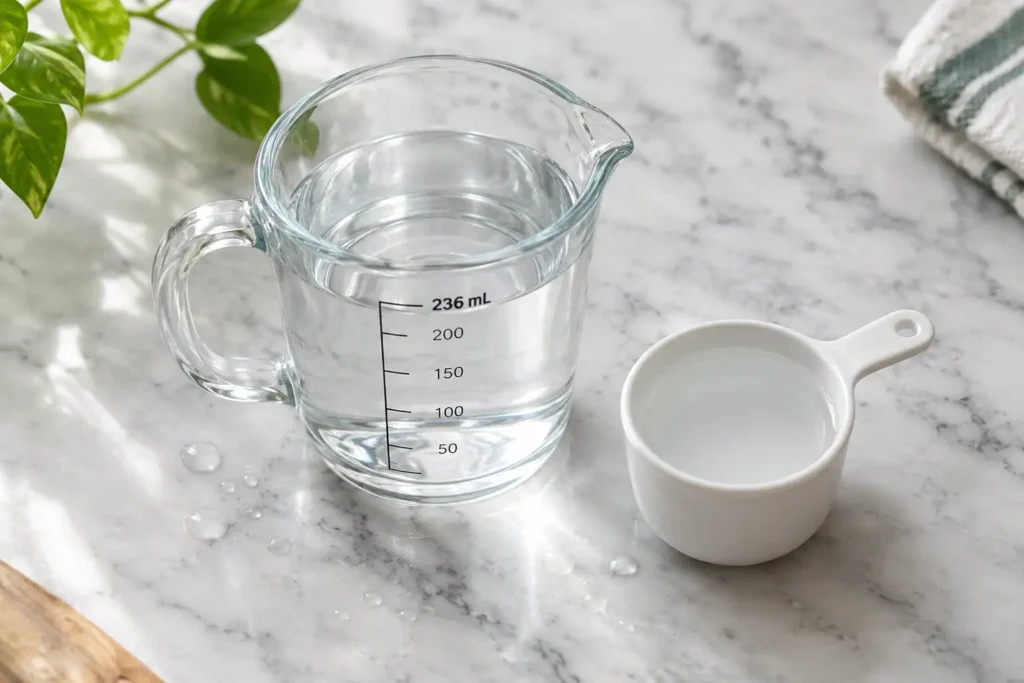
Table of Contents
How to Convert Cups to Milliliters
The conversion is simple and exact because both are measures of volume:
milliliters = cups × 236.588
For example:
- ¼ cup = 59.15 mL
- ½ cup = 118.29 mL
- 1 cup = 236.59 mL
- 1.5 cups = 354.88 mL
- 2 cups = 473.18 mL
- 4 cups = 946.35 mL
To convert the other way (mL → cups):
cups = milliliters ÷ 236.588
For example, 500 mL ÷ 236.588 ≈ 2.11 cups.
The US Cup vs Metric Cup vs UK Cup
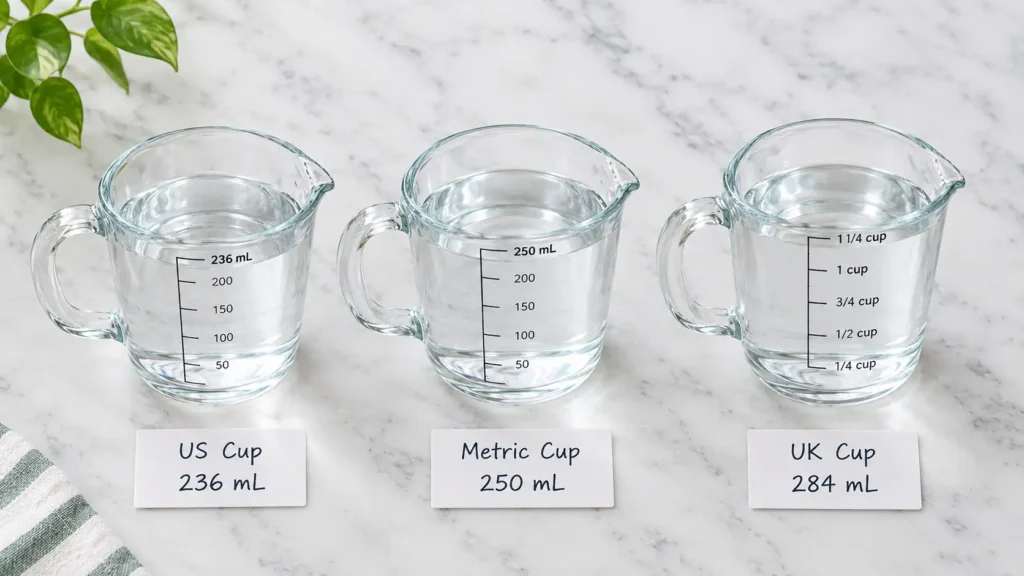
Here’s a common point of confusion: the “cup” isn’t universal. There are three common variants, and using the wrong one changes your results:
| Cup Type | Volume | 1 cup = ? mL |
|---|---|---|
| US customary cup | 236.588 mL | 236.588 mL |
| US legal cup (nutrition labels) | 240 mL | 240 mL |
| Metric cup (Australia, NZ, Canada) | 250 mL | 250 mL |
| UK / Imperial cup (legacy) | 284.13 mL | 284.13 mL |
Our converter uses the US customary cup (236.588 mL) — the standard used in American recipes and most online cooking resources.
If your recipe comes from Australia or New Zealand, be aware that “1 cup” usually means 250 mL, which is about 5.6% larger. If you’re following a metric cup recipe, multiply the result by 250 ÷ 236.588 ≈ 1.057 to get an accurate conversion.
Common Cups to Milliliters Conversions
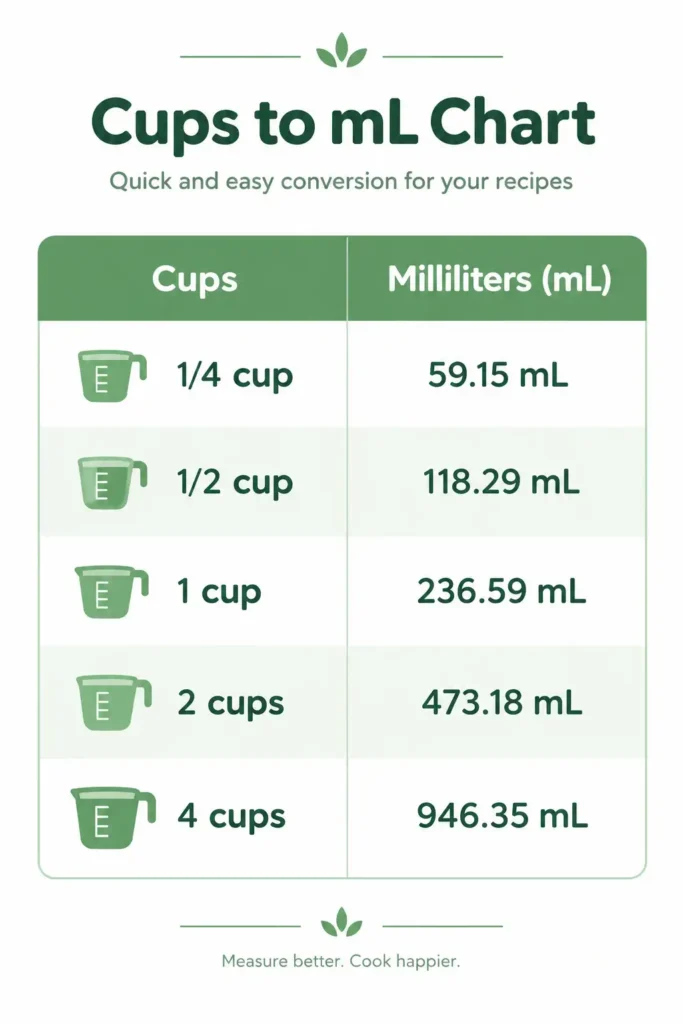
Here’s a quick reference for the most common amounts. For anything else, use the converter at the top of this page.
Cups to Milliliters: Standard Chart
| Cups | Milliliters | Common Use |
|---|---|---|
| ⅛ cup | 29.57 mL | 2 tbsp |
| ¼ cup | 59.15 mL | 4 tbsp |
| ⅓ cup | 78.86 mL | 5 tbsp + 1 tsp |
| ½ cup | 118.29 mL | 8 tbsp |
| ⅔ cup | 157.73 mL | 10 tbsp + 2 tsp |
| ¾ cup | 177.44 mL | 12 tbsp |
| 1 cup | 236.59 mL | 16 tbsp |
| 1 ½ cups | 354.88 mL | 24 tbsp |
| 2 cups | 473.18 mL | 32 tbsp (1 pint) |
| 3 cups | 709.76 mL | 48 tbsp |
| 4 cups | 946.35 mL | 64 tbsp (1 quart) |
Milliliters to Cups: Reverse Chart
| Milliliters | Cups |
|---|---|
| 50 mL | ≈ 0.21 cups |
| 100 mL | ≈ 0.42 cups |
| 200 mL | ≈ 0.85 cups |
| 250 mL | ≈ 1.06 cups |
| 500 mL | ≈ 2.11 cups |
| 1000 mL | ≈ 4.23 cups |
These numbers are helpful when you’re cooking from a metric recipe but only have measuring cups.
Is a US Cup 240 mL or 236.588 mL?
Both numbers show up in cooking, but they serve different purposes:
- 236.588 mL — the US customary cup, used in traditional American recipes, home cooking, and this converter.
- 240 mL — the US legal cup, defined by the FDA for nutrition labeling. It’s a rounded number for packaging labels, not recipes.
For everyday cooking, the 1.4% difference between these two numbers rarely matters. But for baking and precise measurements, 236.588 mL is the correct standard — and that’s what we use here.
If a US recipe says “1 cup,” assume 236.588 mL. If a nutrition label says “1 cup,” assume 240 mL.
When to Use Cups vs Milliliters
Which unit should you use in the kitchen? It depends:
Use cups when:
- Following a US recipe (which uses cups by default)
- Measuring dry ingredients like flour, sugar, or oats
- Working without a kitchen scale
Use milliliters when:
- Following a European, Australian, or Asian recipe
- Measuring liquid ingredients (water, milk, oil, stock)
- Brewing coffee or tea where precision matters
- Making cocktails or drinks with exact ratios
Professional tip: For liquids, milliliters are more precise because measuring cups vary in shape and have a “meniscus” — the curve at the liquid’s surface that makes reading the exact line difficult. A metric measuring jug gives a clearer, more accurate reading.
Cups to Milliliters in Real Recipes
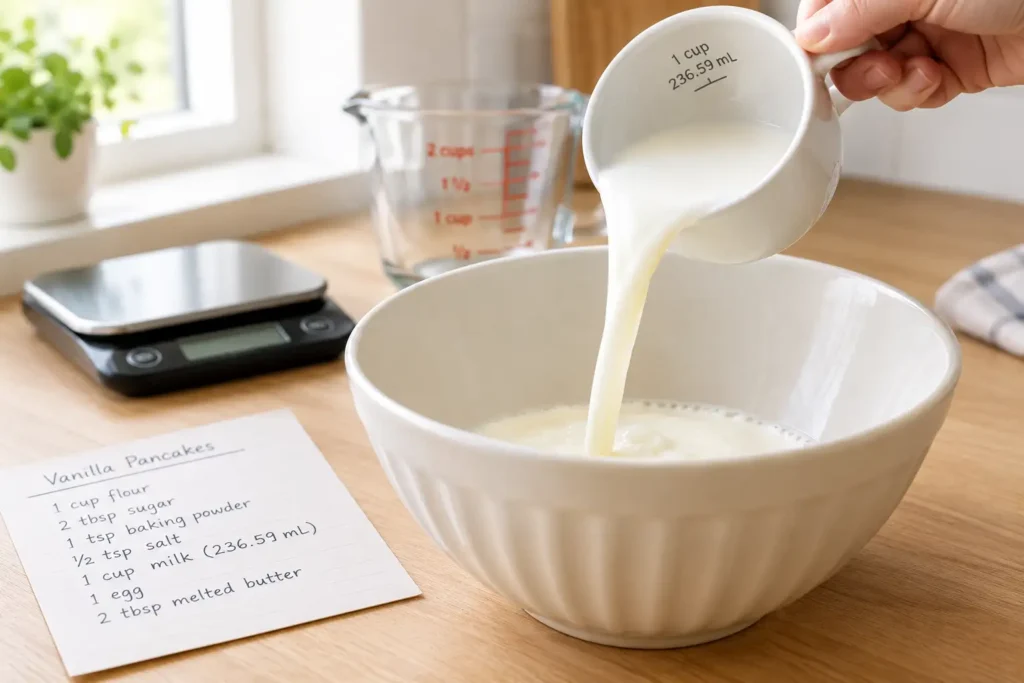
Here are some common situations where the conversion comes up:
“Add 1 cup of milk” → 236.59 mL
“Pour in ½ cup of olive oil” → 118.29 mL
“Stir in 1 ½ cups of water” → 354.88 mL
“Use 250 mL of stock” → about 1 cup (slightly over)
These examples show why this converter is useful in everyday cooking — the numbers are consistent, predictable, and easy to double-check.
Frequently Asked Questions
How many milliliters are in a cup?
One US cup equals 236.588 milliliters. Many recipes round this to 240 mL, but 236.588 mL is the standard US customary cup used in cooking.
Is 250 mL the same as 1 cup?
Approximately. 250 mL is the metric cup (used in Australia, NZ, and some European countries). A US cup is 236.588 mL — so 250 mL is about 5.6% larger than 1 US cup.
How many cups are in 500 mL?
500 mL ÷ 236.588 = about 2.11 cups. For practical cooking, this is roughly 2 cups + 1 tablespoon.
What is 1 cup in mL for water?
1 cup of water = 236.588 mL. Water has the same density as the cup’s volume measurement, so 1 cup → exactly 236.588 mL. For milk, oil, and other liquids, the volume is the same (236.588 mL) even though the weight differs.
How do I convert mL to cups?
Divide milliliters by 236.588. For example, 500 mL ÷ 236.588 = 2.11 cups. Or use the swap button on the converter above to do it instantly.
Why does my recipe say “240 mL” instead of “236.588 mL”?
Some recipes and nutrition labels round the US cup to 240 mL for simplicity. The difference is about 1.4% — negligible in most cooking, but worth knowing for baking and brewing. Our converter uses the more precise 236.588 mL standard.
Is a metric cup the same as a US cup?
No. A metric cup is 250 mL, while a US cup is 236.588 mL — about 5.6% difference. Always check the recipe’s origin: US recipes use US cups, while Australian and NZ recipes use metric cups.